01
They act like signals
Peptides are short chains of amino acids. Many occur naturally in the body and work as messengers between cells, receptors, and systems.
Peptides are not one thing. They are a category of signaling compounds. The right protocol depends on the pathway you want to influence, the dose curve, and how the stack fits your actual goal.
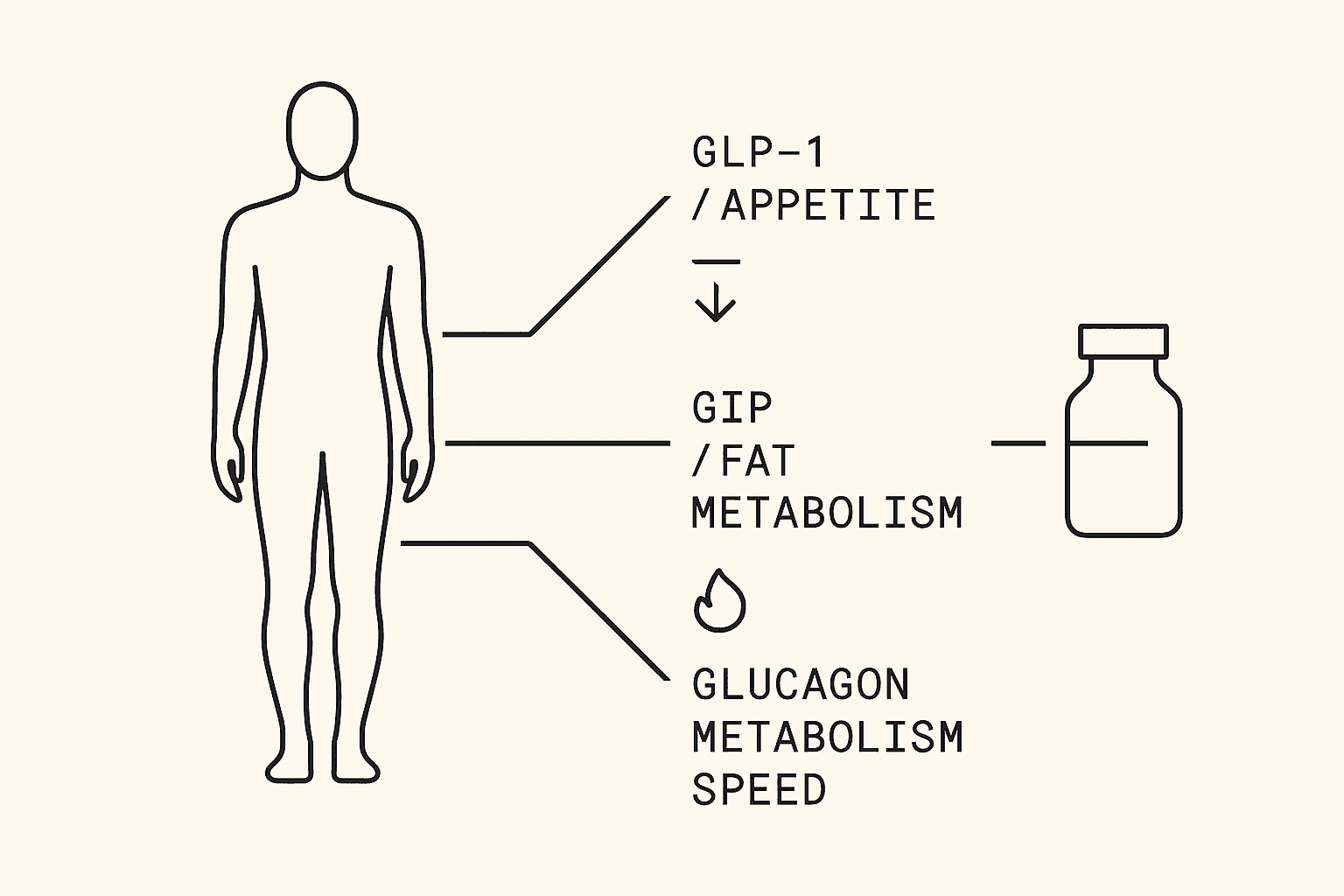
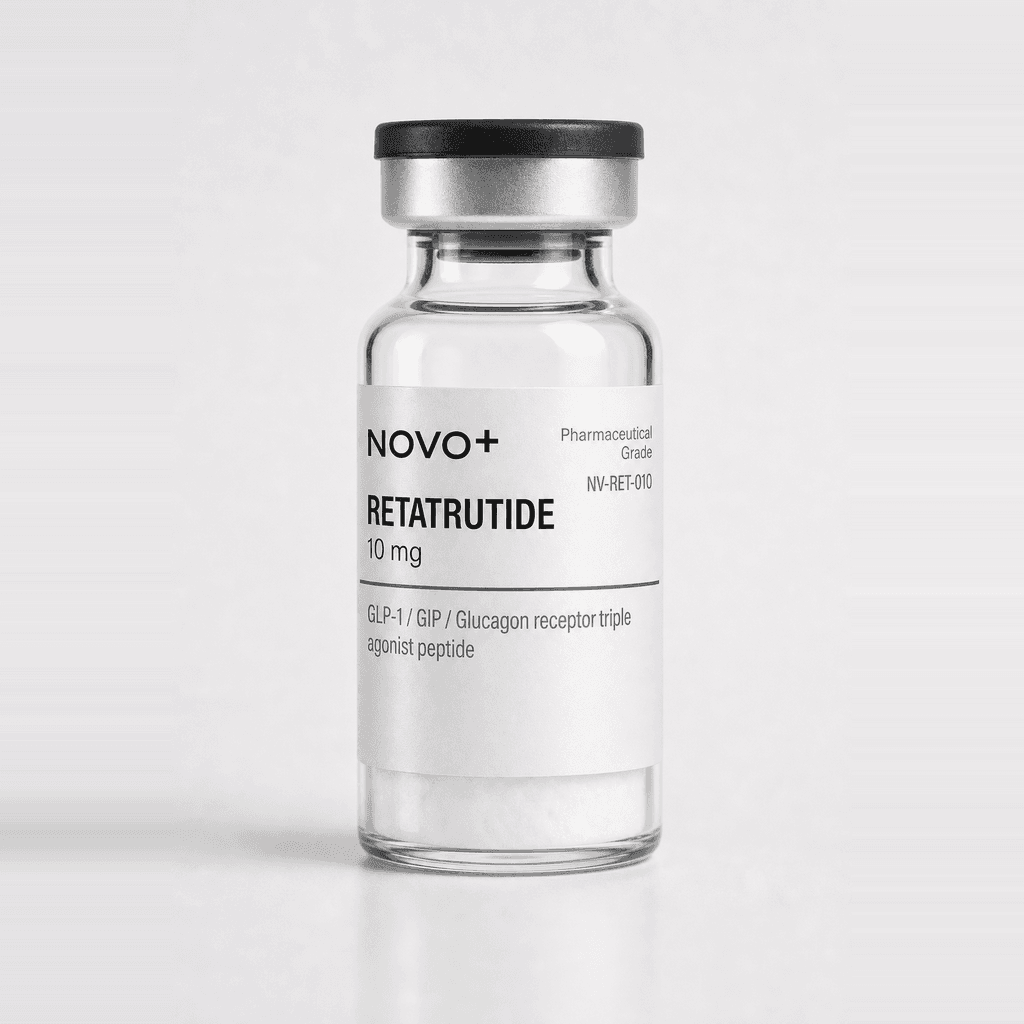
Peptides are short chains of amino acids. Many occur naturally in the body and work as messengers between cells, receptors, and systems.
Different peptides interact with different receptor families, which is why a weight protocol, recovery protocol, and skin protocol should not be treated as the same stack.
Protocol quality comes from matching the compound, starting dose, titration pace, and goal. More is not automatically better.
A peptide protocol should explain why each compound is there, what pathway it supports, and what outcome should be tracked.
Choose the goal: weight loss, recovery, skin, sleep, performance, or longevity.
Match the pathway: metabolic, collagen, tissue repair, circadian, or cellular energy support.
Start conservatively: use a protocol that can be adjusted based on response.
Track outcomes: monitor changes in appetite, recovery, sleep, energy, or skin quality.
Refine the stack: add or remove peptides only when there is a clear reason.
GLP-1, GIP, and glucagon pathway support for appetite, weight, and body composition goals.
Tissue repair and inflammatory response support for training, tendon, joint, and soft-tissue goals.
Copper peptide and collagen-support pathways for elasticity, density, and visible skin quality.
Circadian and deep-rest support for people optimizing recovery, mood, and nightly restoration.
No. Some peptides can influence hormone pathways, but peptides are a broad class of amino-acid signals. Each compound needs to be evaluated on its own mechanism and use case.
A stack combines compounds that support related goals from different angles. A good stack has a reason for every ingredient and avoids overlap that adds complexity without adding value.
The quiz maps the customer goal, sex, timeline, and current priorities to a smaller set of protocol options instead of forcing everyone into a generic product list.